In the age of digital media, storytelling through photography has become an essential skill for both amateurs and professionals. Whether you’re capturing the essence of an event, conveying a message, or evoking emotions, the right tools can significantly enhance your storytelling capabilities. This article will explore five indispensable tools that every photographer should have in their arsenal to elevate their storytelling game.
Capturing stunning storytelling photos requires more than just a good eye; it also involves the right tools. From mastering lighting techniques to utilizing editing software, each element plays a crucial role in your visual narrative. To enhance your skills, be sure to explore our brush tutorials for Photoshop.
1. High-Quality Camera
The foundation of any good photograph is a high-quality camera. While smartphones have made substantial advancements, a dedicated camera can offer superior performance and versatility. When choosing a camera for storytelling, consider the following:
- Sensor Size: Larger sensors capture more light, improving image quality, especially in low-light conditions.
- Interchangeable Lenses: Being able to switch lenses allows for greater creative freedom and adaptability to different environments.
- Manual Controls: A camera with manual settings helps you control exposure, focus, and depth of field, giving you creative power.
Recommended Cameras
| Camera | Type | Key Features |
|---|---|---|
| Canon EOS R5 | Mirrorless | High-resolution sensor, excellent autofocus |
| Nikon D850 | DSLR | Full-frame, versatile shooting options |
| Sony A7 III | Mirrorless | Low-light capability, fast continuous shooting |
2. Quality Lenses
The lens you choose can dramatically influence how your story is told through images. Different focal lengths and aperture sizes can create varied effects and perspectives. Here are some essential types of lenses:
- Wide-Angle Lens: Perfect for landscape or architecture photography, allowing for a greater field of view.
- Standard Lens: Ideal for portraits and everyday shooting, mimicking the human eye’s perspective.
- Telephoto Lens: Useful for capturing distant subjects and compressing the background.
Top Lens Recommendations
- Canon EF 24-70mm f/2.8: Versatile for various situations, great for portraits and landscapes.
- Nikon AF-S 50mm f/1.8: Fantastic for low-light conditions and creating bokeh effects.
- Sony FE 70-200mm f/2.8: Ideal for wildlife and sports photography.
3. Editing Software
A crucial part of storytelling is post-processing. Editing software allows photographers to enhance their images, correcting exposure, color balance, and sharpness. Here are a few must-have software options:
- Adobe Lightroom: Great for batch processing, color correction, and organization.
- Adobe Photoshop: Ideal for detailed retouching and compositing.
- Capture One: Excellent for raw processing with advanced color grading options.
Editing Workflow Tips
- Always shoot in RAW format to retain maximum image data.
- Establish a consistent color palette that resonates with your storytelling theme.
- Utilize presets for efficiency without compromising creativity.
4. Quality Tripod
A sturdy tripod is essential for achieving sharp images and facilitating long exposures. It is especially useful in low-light situations or when shooting landscapes. Here are key features to consider:
- Stability: A heavier tripod offers better stability in windy conditions.
- Height Adjustment: A tripod that can easily adjust to your desired height enhances comfort and composition.
- Portability: For travel, a lightweight and compact tripod can make a significant difference.
Recommended Tripods
| Tripod | Weight | Key Features |
|---|---|---|
| Manfrotto Befree Advanced | 3.6 lbs | Compact and easy to transport |
| Gitzo Series 1 Traveler | 2.5 lbs | High stability, lightweight design |
| Benro Travel Angel | 3.3 lbs | Multi-function, affordable |
5. Storyboarding Tools
Lastly, before you even pick up the camera, having a plan can drastically improve your storytelling. Storyboarding helps you visualize the sequence of your shots. Consider these tools:
- Notion: A versatile platform for organizing ideas, creating outlines, and collaborating.
- Storyboard That: An online tool specifically designed for creating storyboards.
- Trello: Manage your projects and ideas visually with cards and boards.
Creating Effective Storyboards
- Define your narrative: What story are you trying to tell?
- Sketch your ideas: Quick sketches can help visualize each shot.
- Sequence your shots: Organize your images to create a cohesive narrative flow.
Conclusion
Storytelling through photography is an art that requires skill, creativity, and the right tools. By investing in a high-quality camera, quality lenses, editing software, a sturdy tripod, and effective planning tools, you can dramatically enhance your ability to convey compelling stories through your images. Remember, the most powerful stories often come from the heart, so use these tools to express your vision and share your narrative with the world.
FAQ
What are the essential tools for storytelling photos?
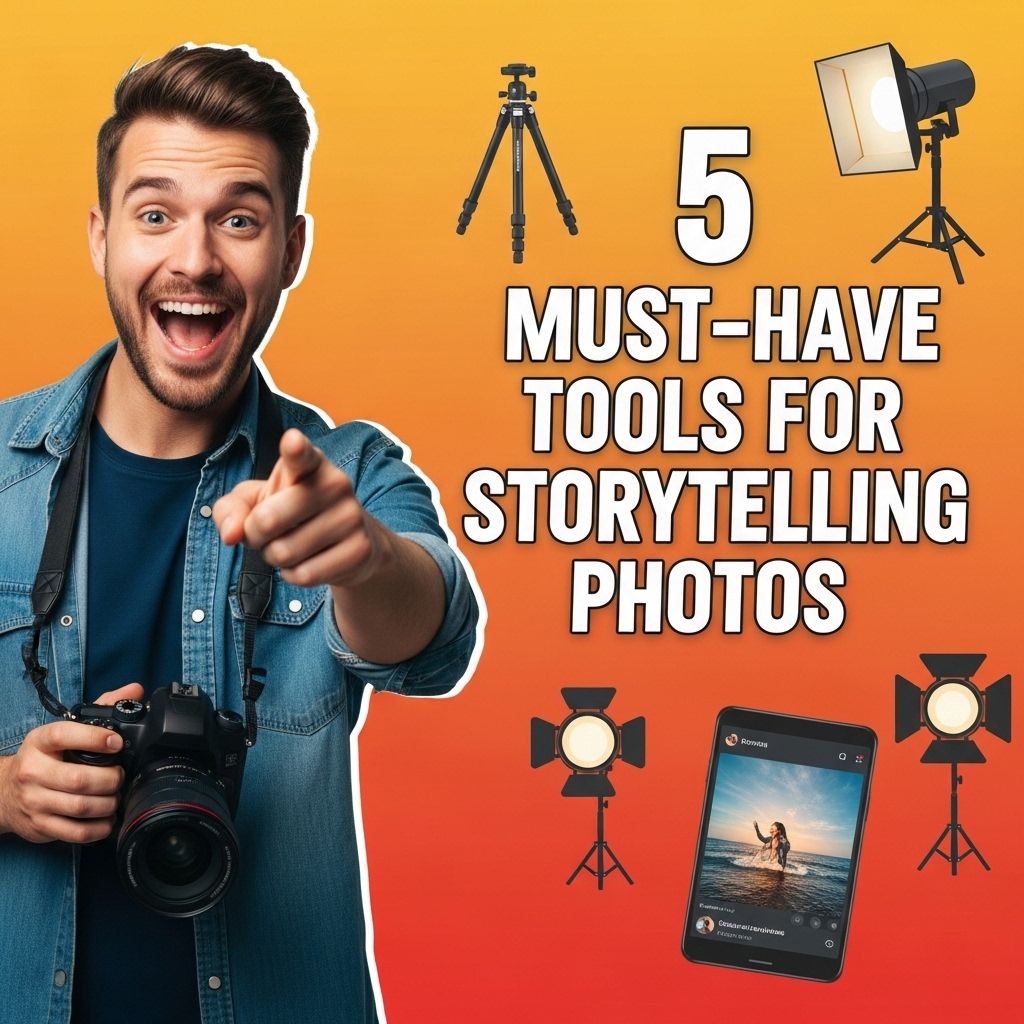
The 5 must-have tools for storytelling photos include a high-quality camera, a versatile lens, a tripod for stability, editing software, and good lighting equipment.
Why is a high-quality camera important for storytelling?
A high-quality camera captures details and colors more accurately, allowing your storytelling photos to convey emotions and narratives more effectively.
How does a versatile lens enhance storytelling in photography?
A versatile lens allows photographers to capture a variety of perspectives and subjects, making it easier to tell complex stories through different compositions.
What role does editing software play in storytelling photos?
Editing software helps refine and enhance images, enabling photographers to adjust colors, contrast, and sharpness to better convey the intended narrative.
Why is lighting equipment crucial for storytelling photography?
Lighting equipment is crucial because it sets the mood and tone of the photo, helping to highlight key elements and draw the viewer’s attention to the story being told.
Can I tell a story without professional tools?
Yes, storytelling can be achieved with basic tools like a smartphone camera; creativity and composition play significant roles in conveying your message.