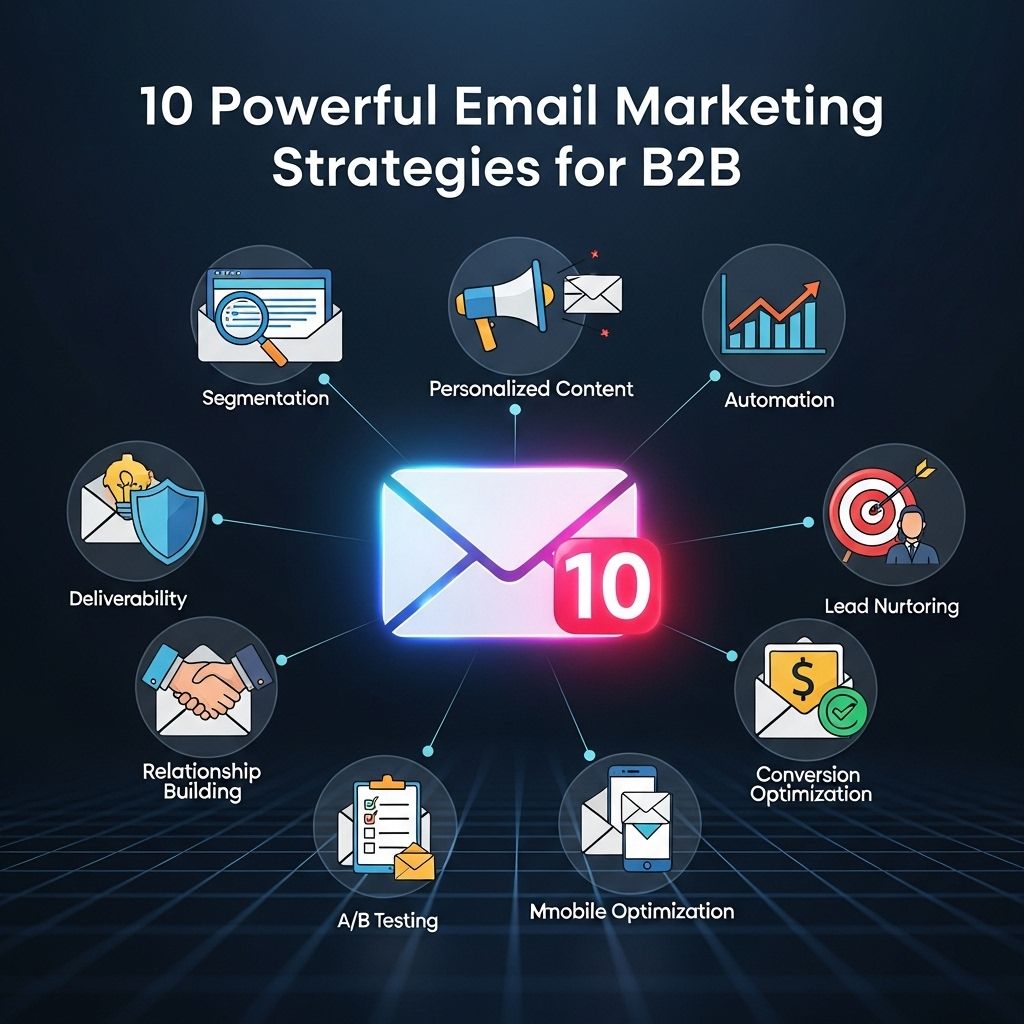
Email marketing remains a cornerstone of effective B2B strategies, delivering high ROI and fostering relationships with prospects and clients. In an era where digital communication is paramount, crafting impactful email campaigns can significantly enhance lead generation and customer retention. Here, we explore ten powerful email marketing strategies tailored specifically for B2B organizations.
In the competitive landscape of B2B marketing, mastering email strategies is essential for success. By leveraging targeted campaigns and personalization, businesses can significantly enhance engagement and conversion rates. Explore innovative approaches, such as using Photoshop for billboard designs, to elevate your visual communications and drive email effectiveness.
1. Segment Your Audience
Segmentation is crucial for targeting the right audience with relevant content. By categorizing your email list based on various criteria, you can tailor your messaging to meet the specific needs of different groups.
Segmentation Criteria
- Industry
- Company size
- Job role
- Engagement level
This strategy allows for more personalized and relevant communications, which can lead to improved open and click-through rates.
2. Personalize Your Emails
Using personalization techniques can make your emails feel more relevant and engaging. This goes beyond just inserting the recipient’s name into the subject line.
Personalization Techniques
- Tailored subject lines
- Dynamic content based on user behavior
- Recommendations based on past interactions
By making your emails feel individualized, you can cultivate stronger relationships with your audience.
3. Optimize for Mobile Devices
With a large percentage of B2B professionals checking their emails on mobile devices, optimizing your emails for mobile viewing is essential. An email that looks great on a desktop but poorly on a smartphone can lose potential leads.
Mobile Optimization Tips
- Use responsive design
- Shorten subject lines to accommodate smaller screens
- Include clear call-to-action buttons
4. Craft Compelling Subject Lines
Your subject line is the first thing recipients see, making it critical to your email’s success. A compelling subject line can entice users to open your email.
Subject Line Best Practices
- Keep it concise (under 50 characters)
- Use action-oriented language
- Incorporate numbers or questions
Experiment with different styles to see what resonates best with your audience.
5. Use Automation Wisely
Email automation can save you time and ensure that your communications are timely and relevant. Setting up automated workflows can help nurture leads through the sales funnel efficiently.
Types of Automation
- Welcome emails
- Follow-up sequences
- Abandoned cart reminders
By automating certain email processes, you can maintain consistent communication without draining resources.
6. Monitor and Analyze Metrics
Understanding the performance of your email campaigns is vital for improvement. By monitoring key metrics, you can gain insights into what works and what doesn’t.
Key Email Metrics to Track
| Metric | Description |
|---|---|
| Open Rate | The percentage of recipients who opened your email. |
| Click-Through Rate (CTR) | The percentage of recipients who clicked on links within your email. |
| Conversion Rate | The percentage of recipients who completed a desired action (e.g., making a purchase). |
| Unsubscribe Rate | The percentage of recipients who opted out of your email list. |
Regularly reviewing these metrics will help you refine your strategy for better performance.
7. A/B Testing for Continuous Improvement
A/B testing allows you to compare two versions of an email to determine which one performs better. This can be an effective way to refine your email campaigns.
What to A/B Test
- Subject lines
- Email content
- Call-to-action buttons
- Sending times
By systematically testing different elements, you can make data-driven decisions that enhance your email marketing strategy.
8. Create Valuable Content
The content of your emails should provide value to the recipient. B2B audiences tend to appreciate insights, tips, and resources that can help them in their professional roles.
Types of Valuable Content
- Industry reports
- How-to guides
- Webinars or event invitations
Focusing on the needs and pain points of your audience will help position your brand as a thought leader.
9. Nurture Leads with Drip Campaigns
Drip campaigns are a series of pre-scheduled emails sent to nurture leads over time. This approach keeps your brand top-of-mind and guides prospects through the decision-making process.
Effective Drip Campaign Strategies
- Welcome sequences
- Educational content series
- Special promotions
By systematically delivering relevant content, you can build trust and rapport with your audience.
10. Ensure Compliance with Regulations
Lastly, it is crucial to ensure your email marketing practices comply with regulations such as GDPR and CAN-SPAM. Failing to comply can result in hefty fines and damage to your reputation.
Compliance Tips
- Obtain explicit consent before sending emails
- Provide a clear unsubscribe option in every email
- Keep your data secure and private
By respecting your audience’s privacy, you build trust and credibility.
In conclusion, implementing these ten powerful email marketing strategies can significantly enhance your B2B marketing efforts. By focusing on personalization, automation, and compliance, while providing valuable content, you can cultivate lasting relationships with your clients and drive meaningful results.
FAQ
What are the most effective email marketing strategies for B2B?
Effective B2B email marketing strategies include personalized content, segmenting your audience, automating campaigns, and utilizing A/B testing to optimize performance.
How can I segment my B2B email list for better results?
You can segment your B2B email list based on criteria such as industry, company size, job title, and engagement level to ensure your messages are relevant to each group.
What role does automation play in B2B email marketing?
Automation allows B2B marketers to send timely and relevant emails based on user behavior, nurturing leads and maintaining engagement without manual intervention.
How important is personalization in B2B email campaigns?
Personalization is crucial in B2B email campaigns as it helps build stronger relationships, increases open rates, and improves overall engagement with your audience.
What metrics should I track for my B2B email marketing campaigns?
Key metrics to track include open rates, click-through rates, conversion rates, bounce rates, and unsubscribe rates to measure the effectiveness of your campaigns.
How can I improve the open rates of my B2B emails?
To improve open rates, focus on crafting compelling subject lines, optimizing send times, and ensuring your emails are mobile-friendly to attract more recipients.