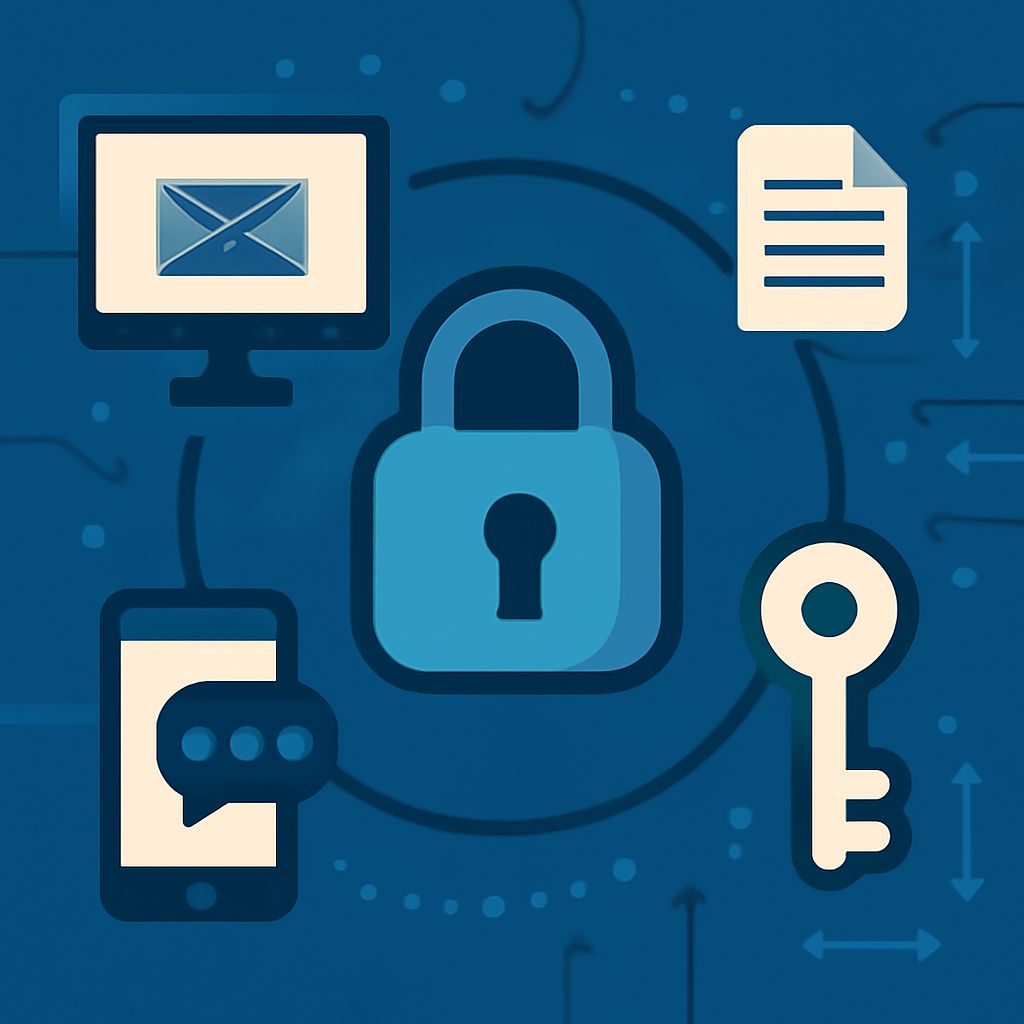
Secure Your Communication: Best Encryption Solutions
In an increasingly digital world where information is shared at lightning speed, ensuring the security of our communications has never been more critical. Encryption is a powerful technology that helps protect sensitive data by transforming it into an unreadable format for unauthorized users. This article will explore the importance of encryption, various encryption methods, and the best encryption solutions available today.
In today’s digital landscape, ensuring secure communication is more critical than ever. With a multitude of encryption solutions available, choosing the right one can enhance privacy and protect sensitive information from breaches. To gain insights into effective strategies, explore various billboard mockup styles that visually represent how these solutions can be communicated effectively.
The Importance of Encryption
Encryption serves as the first line of defense against unauthorized access to personal and corporate data. Here are some key reasons why encryption is essential:
- Protection of Sensitive Information: Encryption safeguards data such as financial information, health records, and personal identifiers from being intercepted and misused by malicious actors.
- Regulatory Compliance: Many industries are subject to regulations requiring data protection measures. Encryption helps organizations comply with laws such as GDPR, HIPAA, and PCI-DSS.
- Maintaining Privacy: In an era where privacy concerns are paramount, encryption ensures that personal communications remain confidential.
- Data Integrity: Encryption not only protects data from unauthorized access but also helps ensure that it has not been altered or tampered with during transmission.
Types of Encryption
There are several types of encryption used to protect data. Understanding these types can help you choose the appropriate solution for your needs:
| Type of Encryption | Description |
|---|---|
| Symmetric Encryption | Uses a single key for both encryption and decryption. Fast and efficient for large data sets but requires secure key distribution. |
| Asymmetric Encryption | Uses a pair of keys (public and private) for encryption and decryption. More secure than symmetric encryption but slower in processing. |
| Hashing | Transforms data into a fixed-size string of characters, which is typically a hexadecimal value. Primarily used for ensuring data integrity rather than confidentiality. |
| End-to-End Encryption | Encrypts data at the sender’s device and only decrypts it at the receiver’s device, ensuring that intermediaries cannot read the content. |
Best Encryption Solutions
With numerous encryption solutions available, here are some of the best options currently on the market:
1. VeraCrypt
Overview: VeraCrypt is a free, open-source disk encryption software that allows users to create a virtual encrypted disk that can be mounted as a real disk. It is the successor to TrueCrypt and offers enhanced security.
- Features:
- Supports various encryption algorithms such as AES, Serpent, and Twofish.
- Provides hidden volumes for added security.
- Cross-platform compatibility (Windows, macOS, Linux).
2. BitLocker
Overview: BitLocker is a built-in disk encryption feature in Windows that provides full disk encryption to protect against data theft or exposure on lost or stolen devices.
- Features:
- Seamless integration with Windows 10 and later.
- Uses AES encryption with 128 or 256-bit keys.
- Supports TPM (Trusted Platform Module) for enhanced security.
3. AxCrypt
Overview: AxCrypt is a file encryption software designed for individuals and businesses, providing a user-friendly interface for encrypting files and folders.
- Features:
- Simple integration with Windows Explorer for easy access.
- Supports AES-128 and AES-256 encryption.
- Offers password protection and secure sharing features.
4. LastPass
Overview: LastPass is a password manager that not only stores passwords but also encrypts them, ensuring a secure way to manage login credentials.
- Features:
- Uses AES-256 bit encryption to safeguard data.
- Cross-platform availability with browser extensions and mobile apps.
- Supports secure password sharing and password generation.
5. Signal
Overview: Signal is an encrypted messaging app that provides end-to-end encryption for text messages, voice calls, and video calls, ensuring private communication between users.
- Features:
- Open-source platform allowing for transparency in security practices.
- Self-destructing messages for additional privacy.
- Group chat capabilities with encryption.
6. OpenSSL
Overview: OpenSSL is a robust open-source toolkit for implementing SSL and TLS protocols, widely used for securing web communications.
- Features:
- Supports a wide range of cryptographic algorithms.
- Can be used for public key infrastructure (PKI) management.
- Highly customizable for developers and IT professionals.
7. NordVPN
Overview: While primarily known as a VPN service, NordVPN includes robust encryption protocols to secure internet traffic, ensuring safe browsing and communication.
- Features:
- Uses AES-256 encryption for data security.
- Offers a no-logs policy to enhance user privacy.
- Access to servers in multiple countries for secure browsing.
How to Choose the Right Encryption Solution
Selecting the right encryption solution depends on various factors. Here are some considerations to keep in mind:
- Type of Data: Assess the sensitivity of the information you need to protect. Different solutions may be more suitable for personal versus corporate data.
- Usability: Consider how easy the software is to use. A solution that is difficult to navigate may not be effective in practice.
- Compatibility: Ensure the encryption solution is compatible with the operating systems and devices you use.
- Level of Security: Look for solutions that offer strong encryption standards (e.g., AES-256) and adhere to regulatory compliance standards.
- Cost: Evaluate your budget and consider both free and paid options, weighing the features offered against the cost.
Conclusion
As communication continues to evolve in the digital age, the significance of securing your data through encryption cannot be overstated. Whether for personal or business use, choosing an effective encryption solution is crucial for protecting sensitive information and maintaining privacy. By understanding the types of encryption available and evaluating the best solutions on the market, you can make informed decisions to safeguard your communications effectively.
FAQ
What is encryption and why is it important?
Encryption is the process of converting data into a coded format to prevent unauthorized access. It is crucial for protecting sensitive information during transmission and storage.
What are the best encryption solutions available?
Some of the best encryption solutions include AES (Advanced Encryption Standard), RSA (Rivest–Shamir–Adleman), and TLS (Transport Layer Security) for secure communications.
How does end-to-end encryption work?
End-to-end encryption ensures that only the communicating users can read the messages. Data is encrypted on the sender’s device and only decrypted on the recipient’s device.
What are the benefits of using encryption for communication?
Using encryption protects privacy, secures sensitive data from cyber threats, builds trust with clients, and ensures compliance with data protection regulations.
Can encryption prevent data breaches?
While encryption cannot prevent data breaches entirely, it significantly reduces the risk by making stolen data unreadable without the encryption key.