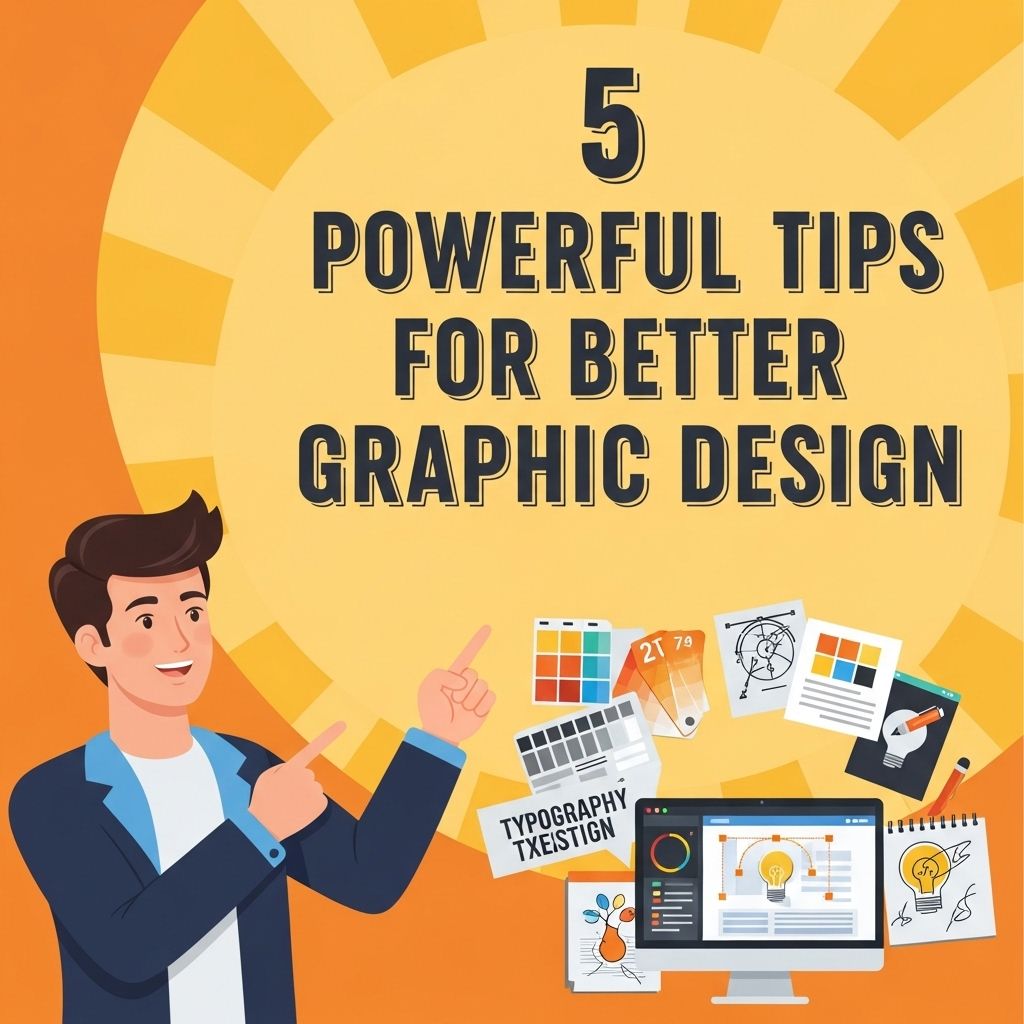
Graphic design is an essential aspect of communication in the digital age, where visual content plays a crucial role in attracting attention and conveying messages effectively. Whether you are a seasoned designer or just starting, improving your graphic design skills can significantly impact your projects and career. In this article, we will explore five powerful tips that can elevate your graphic design work to new heights.
Graphic design is essential for effective communication and branding, yet many struggle to create eye-catching visuals. Here are 5 powerful tips that can elevate your design skills and help ensure your graphics resonate with your audience. For instance, you can Showcase your brand with 3D mockups to create a vivid and engaging presentation of your ideas.
Understanding the Basics of Design
Before diving into advanced techniques, it’s vital to grasp the fundamental principles of design. These principles guide the creation of visually appealing and effective designs. Here are some core concepts to consider:
- Contrast: Ensure that elements stand out from each other.
- Alignment: Organize elements to create a clean and cohesive look.
- Repetition: Use consistent styles to promote unity within your design.
- Proximity: Group related items to improve comprehension.
- White Space: Utilize empty spaces to avoid clutter and enhance focus.
1. Choose the Right Color Palette
Color plays a crucial role in graphic design, influencing emotions and perceptions. Selecting the right color palette can significantly improve your designs. Here are some tips:
Color Theory Basics
Understanding color relationships is essential in design. Here are the main types of color harmonies:
| Color Harmony | Description |
|---|---|
| Complementary | Colors opposite on the color wheel. |
| Analogous | Colors next to each other on the color wheel. |
| Triadic | Three colors evenly spaced around the color wheel. |
| Tetradic | Four colors forming a rectangle on the color wheel. |
Tools for Color Selection
Utilize online tools to help select and generate color palettes, such as:
2. Focus on Typography
Typography is another critical element of graphic design. The right font can convey the appropriate tone and enhance readability. Here’s what to keep in mind:
Font Selection
When choosing fonts, consider:
- Brand Identity: Ensure that the font aligns with the brand’s personality.
- Readability: Select fonts that are easy to read, especially in body text.
- Contrast: Use different font weights or styles to create visual interest.
Font Pairing
Pairing fonts effectively can elevate your design:
- Contrast: Pair a bold header font with a simple body font.
- Complementary Styles: Use serif fonts with sans-serif fonts for balance.
3. Master Layout and Composition
A well-structured layout enhances user experience and guides the viewer’s eye. Here are key components:
The Rule of Thirds
Divide your canvas into a grid of thirds. Place important elements along these lines or their intersections for a balanced composition.
Visual Hierarchy
Establish a hierarchy through size, color, and placement:
- Use larger fonts for headings.
- Utilize bolder colors for important messages.
- Place elements strategically based on their importance.
4. Incorporate Visual Elements Wisely
Visual elements like images, icons, and shapes can enhance your design but should be used thoughtfully:
Using Images
Ensure that images are high-quality and relevant. Consider:
- Resolution: Use high-resolution images for print and digital media.
- Relevance: Ensure images support the message you want to convey.
Icons and Illustrations
Icons can simplify complex concepts. Choose icons that:
- Are consistent in style and size.
- Enhance understanding without overwhelming the viewer.
5. Seek Feedback and Iterate
The best designs often emerge through feedback and iteration. Here’s how to effectively seek and implement feedback:
Gathering Feedback
Share your work with peers, clients, or online communities. Consider using:
- Design critique groups.
- Social media platforms to gauge reactions.
- Surveys to collect structured feedback.
Iterative Design Process
Implement feedback through an iterative process:
- Revise your design based on constructive criticism.
- Test different variations and see which resonates best.
- Refine your design until the vision is realized.
Conclusion
Graphic design is both an art and a science, requiring a blend of creativity and technical skills. By mastering the basics, selecting appropriate colors and fonts, focusing on layout, incorporating visual elements effectively, and remaining open to feedback, you can significantly enhance your graphic design capabilities. Keep practicing and experimenting to find your unique style while applying these powerful principles to your work.
FAQ
What are the essential elements of graphic design?
The essential elements of graphic design include line, shape, color, texture, space, form, and typography. Mastering these elements helps in creating visually appealing designs.
How can color theory improve my graphic design skills?
Understanding color theory can significantly enhance your graphic design skills by helping you choose the right color palettes that evoke emotions and ensure harmony in your designs.
What role does typography play in graphic design?
Typography is crucial in graphic design as it affects readability and conveys the tone of the message. Choosing the right fonts and styles can enhance the overall impact of a design.
How do I create a strong visual hierarchy in my designs?
To create a strong visual hierarchy, use size, color, contrast, and spacing to guide the viewer’s eye through the design. Prioritize information based on importance to enhance readability.
What are some common mistakes to avoid in graphic design?
Common mistakes in graphic design include overcrowding elements, poor color choices, inconsistent typography, neglecting alignment, and ignoring the target audience. Avoiding these can lead to more effective designs.