
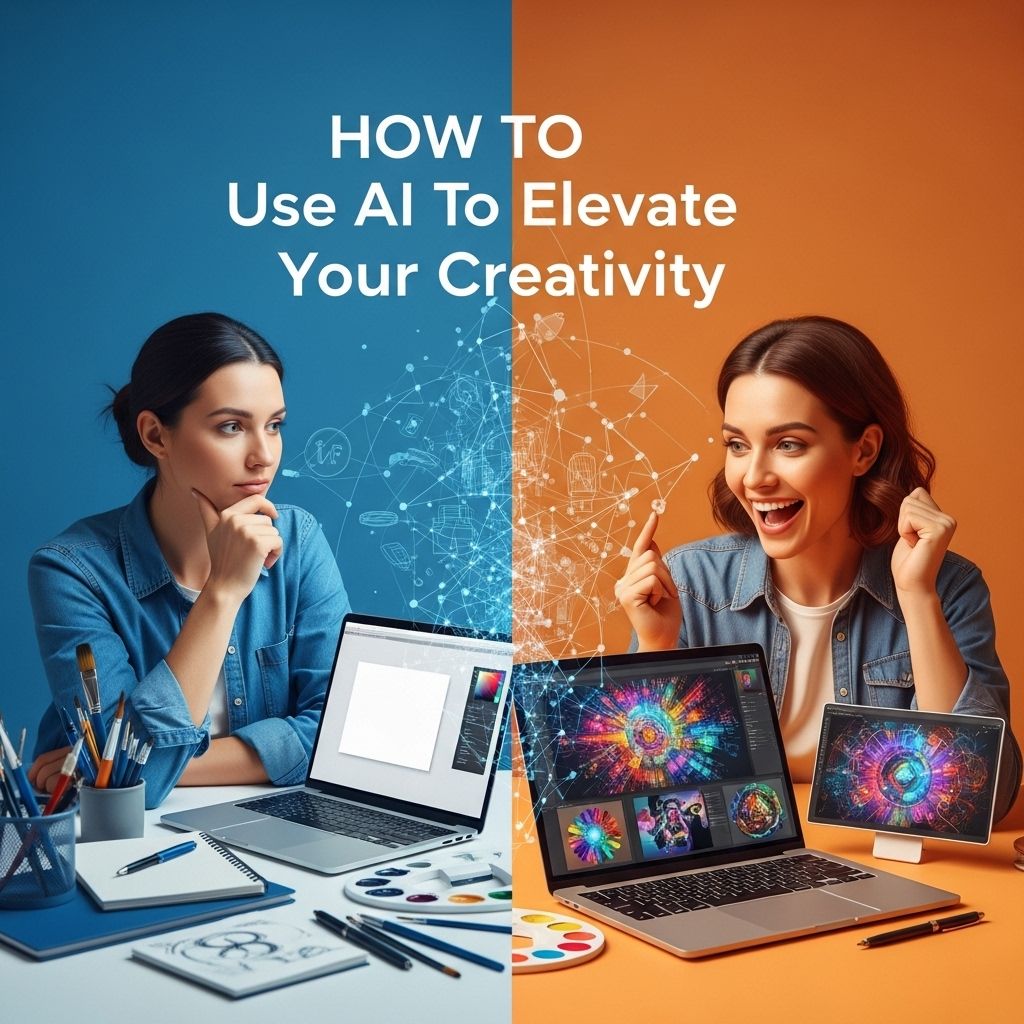
In today’s fast-paced digital landscape, incorporating artificial intelligence (AI) into creative processes has become a game-changer for artists, designers, writers, and innovators alike. Whether you’re looking to enhance your artwork, streamline your writing, or develop innovative solutions, AI offers a unique set of tools to elevate your creative output. This article delves into various ways AI can be harnessed to boost creativity, along with practical tips and strategies.
In today’s fast-paced world, AI tools can play a transformative role in enhancing your creativity. By leveraging these innovative resources, you can unlock new ideas and streamline your creative processes. Explore some of the top-rated AI resources to elevate your artistic journey.
The Role of AI in Creative Processes
AI technologies have evolved significantly, enabling them to assist in various creative fields. Here are some of the core functions of AI in creativity:
- Idea Generation: AI can help brainstorm ideas by analyzing existing works and suggesting novel concepts.
- Algorithmic Art: Artists can produce unique pieces of artwork using AI algorithms that generate visuals based on specific inputs.
- Writing Assistance: AI tools can assist writers in crafting narratives, suggesting plot twists, or even generating entire articles.
- Music Composition: Musicians can leverage AI to create melodies or suggest chord progressions that add depth to their compositions.
Exploring AI Tools for Creative Enhancement
Several AI tools are available today that cater to different creative needs. Here’s a look at some prominent AI applications:
1. Generative Art Platforms
Generative art platforms utilize algorithms to create stunning visual art. Some popular tools include:
| Tool | Description |
|---|---|
| DALL-E | A neural network that generates images from textual descriptions. |
| DeepArt | Transforms photos into artwork using the style of famous artists. |
| Artbreeder | Combines images using genetic algorithms to create new artwork. |
2. Writing Aids
For writers, AI can serve as a co-author or editor. Here are some notable writing aids:
- Grammarly: An AI-powered writing assistant that checks grammar, punctuation, and style.
- Jasper: A tool that generates content based on prompts and offers suggestions for improvements.
- QuillBot: A paraphrasing tool that helps writers rephrase sentences for clarity and creativity.
3. Music Composition Software
Musical creativity can also be enhanced with AI. Consider these applications:
- AIVA: An AI composer that creates original musical scores for various genres.
- Amper Music: A music creation tool that allows users to produce and customize tracks quickly.
- Google’s Magenta: A research project that explores the role of AI in music and art.
Practical Strategies for Integrating AI into Your Creative Workflow
Integrating AI into your creative process involves more than just using tools; it requires a thoughtful approach. Here are some strategies:
1. Experiment and Explore
Don’t be afraid to experiment with different AI tools. Explore various applications and find what resonates with your creative style. For instance, an artist might try using DALL-E to generate unique backgrounds, while a writer might leverage Jasper for dialogue creation.
2. Combine Human and Machine Creativity
AI should be seen as a collaborator rather than a replacement. Use AI-generated content as a foundation to build upon. For example:
- An author could start with an AI-generated outline and then flesh it out with personal storytelling.
- A designer might create a base image with generative art tools and add personal touches through traditional methods.
3. Set Clear Goals
Before diving into AI tools, define your creative goals. Ask yourself:
- What do I want to achieve with this tool?
- How can AI help streamline my creative process?
- Am I willing to embrace the unpredictability of AI outputs?
Understanding the Limitations of AI in Creativity
While AI offers impressive capabilities, it’s important to recognize its limitations:
- Lack of Emotional Depth: AI does not possess human emotions, which can be critical in creative expression.
- Contextual Understanding: AI might misinterpret prompts or lack the depth of understanding that human creativity brings.
- Dependence on Data: AI tools generate outputs based on existing data, which means they can inadvertently reproduce biases or cliched ideas.
Future Trends in AI and Creativity
The intersection of AI and creativity is evolving rapidly. Here are some trends to watch for:
1. Enhanced Personalization
As AI becomes more sophisticated, it will offer increasingly personalized tools that adapt to individual creativity styles.
2. Collaboration Platforms
Future creative platforms are likely to focus on collaboration, allowing artists, writers, and musicians to create together using AI.
3. Ethical AI Use
As AI becomes entwined with creative processes, discussions around ethical use will become paramount. Artists will need to consider authorship and originality in AI-generated works.
Conclusion
Embracing AI technology can elevate your creative potential, offering innovative solutions and enhancing your artistic expression. By understanding the tools available, experimenting with new methods, and recognizing the limitations of AI, you can fuse human creativity with machine intelligence to unleash your full creative capabilities. The journey is about collaboration, exploration, and pushing the boundaries of what creativity can achieve in a tech-driven world.
FAQ
How can AI enhance my creative process?
AI can assist in generating new ideas, providing inspiration, and automating repetitive tasks, allowing you to focus more on the creative aspects of your work.
What tools are available to use AI for creativity?
There are various tools like DALL-E for image generation, ChatGPT for writing assistance, and Jukedeck for music creation that leverage AI to boost creativity.
Can AI help in brainstorming sessions?
Yes, AI can suggest themes, prompts, and concepts that can stimulate brainstorming and lead to innovative solutions.
Is AI a replacement for human creativity?
No, AI is a tool that complements and enhances human creativity rather than replacing it, providing new perspectives and ideas.
How do I start using AI in my creative projects?
Begin by exploring popular AI tools related to your field, experimenting with them to see how they can fit into your creative workflow.
What are the limitations of using AI for creative tasks?
AI may lack the personal touch and emotional depth that human creators bring, and it can sometimes produce generic outputs if not guided effectively.


