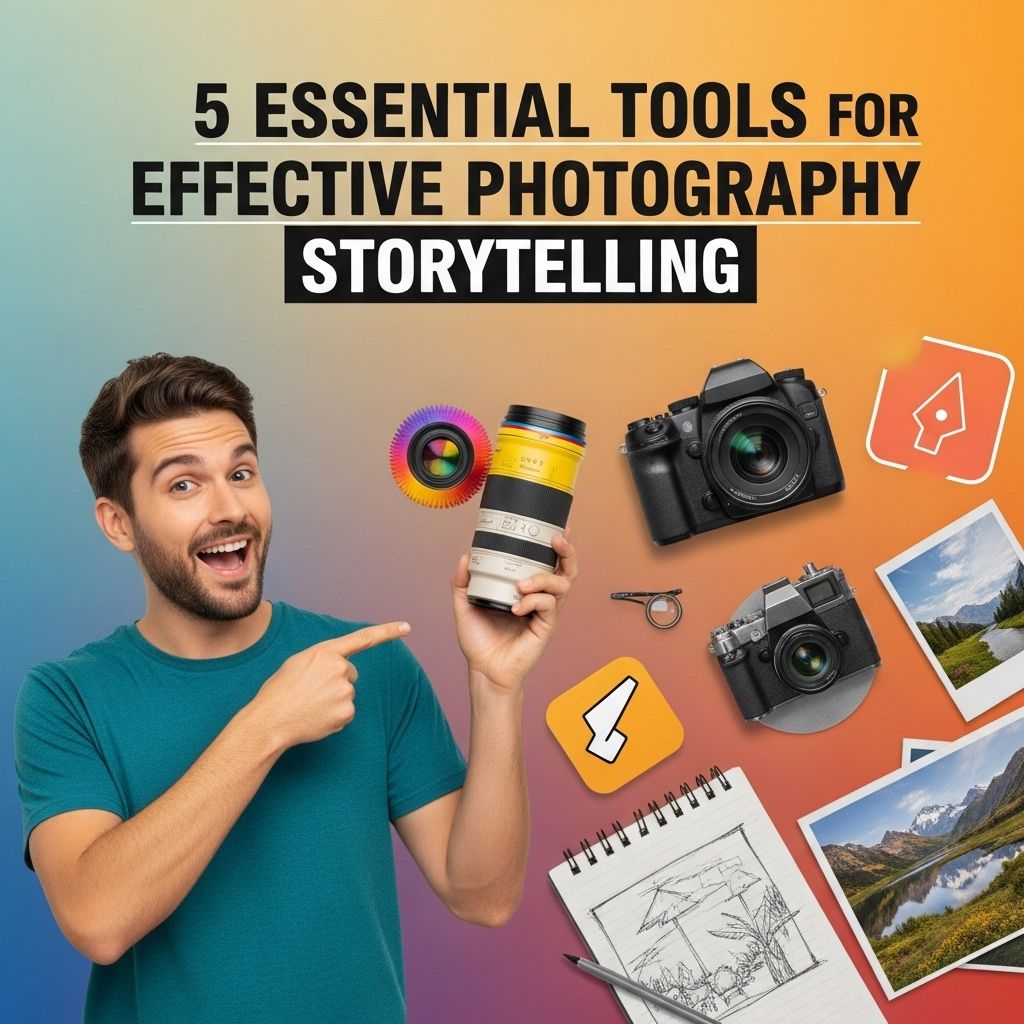
In the realm of photography, storytelling transcends mere imagery; it intertwines emotion, context, and creativity to capture the essence of a moment. While the right camera and lens are foundational, the tools that aid in enhancing the narrative are equally crucial. This article delves into the five essential tools that every photographer should consider to elevate their storytelling capabilities and create impactful narratives through their work.
Effective photography storytelling requires not just a keen eye, but also the right tools to enhance your narrative. From capturing the perfect shot to refining it in post-processing, understanding the essentials can elevate your visual stories. For instance, mastering advanced brush settings in Photoshop can significantly improve your editing finesse.
1. High-Quality Camera
A camera serves as the primary tool for any photographer. However, the quality of the camera plays a pivotal role in the storytelling process. Here’s what to consider:
- Sensor Size: Larger sensors typically provide better image quality, especially in low light.
- Interchangeable Lenses: A camera with the ability to switch lenses allows for versatile shooting scenarios.
- Manual Controls: Full control over aperture, shutter speed, and ISO enhances creative possibilities.
Travel and portrait photographers often rely on DSLRs or mirrorless systems, while smartphone cameras equipped with advanced features are becoming increasingly popular, especially for spontaneous storytelling.
Top Camera Recommendations
| Camera | Type | Key Features |
|---|---|---|
| Canon EOS R5 | Mirrorless | 45 MP, 8K video, Dual Pixel AF |
| Nikon D850 | DSLR | 45.7 MP, 4K video, robust build |
| Fujifilm X-T4 | Mirrorless | 26 MP, in-body stabilization, classic controls |
2. Editing Software
The power of photography storytelling extends beyond capturing an image; it’s also about post-processing. Editing software allows photographers to refine and enhance their visuals. Two popular options include:
- Adobe Lightroom: Excellent for batch editing, color correction, and organizing photos.
- Adobe Photoshop: Ideal for detailed retouching, creating composites, and advanced manipulation.
With the right editing tools, photographers can transform their images to better convey the story behind them, ensuring that every detail aligns with their vision.
Essential Editing Tips
- Always shoot in RAW format for greater editing flexibility.
- Maintain a consistent color palette to strengthen storytelling.
- Utilize layers in Photoshop for non-destructive editing.
3. Lighting Equipment
Lighting can make or break a photograph. Natural light is often favored, but sometimes it’s essential to harness artificial lighting for dramatic effects or to evoke specific moods.
Types of Lighting Equipment
- Speedlights: Portable flashes that add fill light or can be used off-camera for creative effects.
- Softboxes: Provide diffused light, reducing harsh shadows and creating a soft, flattering light.
- Reflectors: Used to bounce light back onto the subject, filling in shadows and enhancing detail.
Understanding how to manipulate light enables photographers to craft narratives that resonate with viewers, drawing them into the story being told.
4. Photography Portfolio Website
In today’s digital age, a strong online presence is essential for photographers. A well-crafted portfolio website serves as a platform for showcasing storytelling prowess and connecting with audiences.
Features of an Effective Portfolio
- Clean Design: A user-friendly interface that highlights images without distractions.
- About Page: A personal touch that communicates the photographer’s story, style, and mission.
- Blog Section: An opportunity to share insights about projects, techniques, and photography experiences.
- Contact Information: Easy-to-find contact details for potential clients and collaborators.
Building a portfolio website not only enhances visibility but also reinforces the photographer’s narrative by providing context and background to the images.
5. Storyboarding Tools
Before hitting the shutter button, it’s beneficial to plan the visual narrative. Storyboarding tools help visualize the sequence of images and the story arc.
Popular Storyboarding Tools
- Canva: Offers templates for visual storyboards, allowing for creative layouts and designs.
- StudioBinder: A production management tool that includes storyboarding features suitable for complex projects.
Using storyboarding techniques can enhance coherence in visual storytelling and ensure that the final collection of images aligns with the intended narrative.
Conclusion
Effective photography storytelling is an amalgamation of the right tools, skills, and creativity. By incorporating a high-quality camera, editing software, lighting equipment, a professional portfolio website, and storyboarding techniques, photographers can enhance their ability to tell compelling stories through images. These tools not only facilitate the technical aspects of photography but also enrich the overall narrative experience, allowing photographers to connect with their audience on a deeper level. Embrace these essentials, and embark on a journey of captivating storytelling through your lens.
FAQ
What are the essential tools for effective photography storytelling?
The essential tools for effective photography storytelling include a high-quality camera, versatile lenses, a sturdy tripod, editing software, and an external flash or lighting equipment.
How does a camera enhance photography storytelling?
A camera enhances photography storytelling by capturing high-resolution images that convey emotions, details, and narratives through visual elements.
Why are editing tools important in photography storytelling?
Editing tools are important in photography storytelling as they allow photographers to enhance colors, contrast, and clarity, helping to better convey the intended message or mood.
What role do lenses play in photography storytelling?
Lenses play a crucial role in photography storytelling by providing different perspectives, depths of field, and focusing capabilities that can dramatically change how a story is told through images.
How can a tripod improve my photography storytelling?
A tripod can improve photography storytelling by stabilizing the camera for sharper images, allowing for longer exposure times, and enabling creative compositions without camera shake.
What type of lighting equipment is best for photography storytelling?
The best type of lighting equipment for photography storytelling includes external flashes, softboxes, and reflectors, which help create mood and highlight subjects effectively.