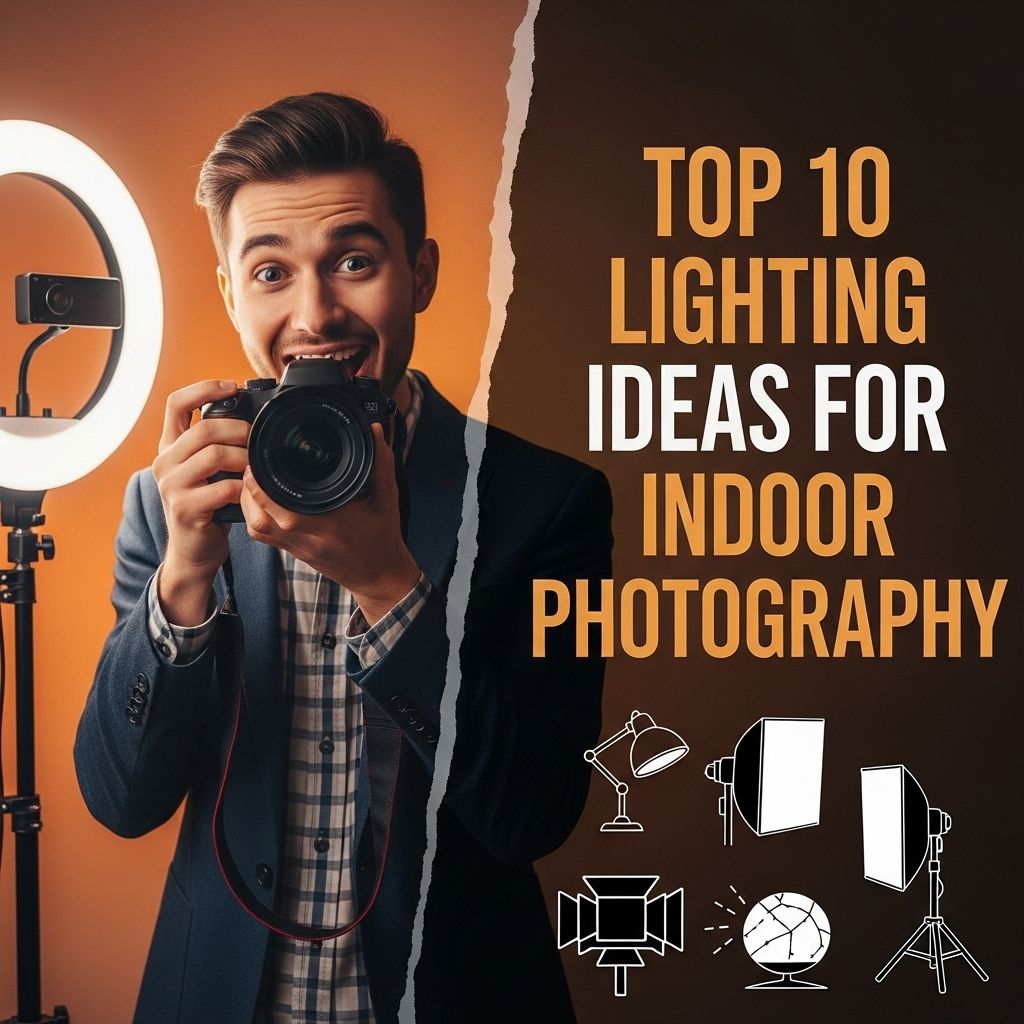
Lighting is one of the most crucial elements in indoor photography, significantly influencing the mood, texture, and overall quality of your images. Whether you are shooting portraits, food, or product photography, understanding various lighting techniques can elevate your photos from ordinary to extraordinary. In this article, we will explore ten innovative lighting ideas that can help you enhance your indoor photography skills.
Indoor photography can be transformed with the right lighting techniques, making even the simplest scenes look stunning. This guide explores 10 creative lighting ideas that can elevate your indoor shots and bring your vision to life. For those interested in enhancing their visuals with unique elements, check out Affordable 3D logo design solutions.
Natural Light Utilization
One of the simplest yet most effective ways to light your indoor photography is through natural light. Harnessing sunlight can provide a soft and flattering illumination that enhances colors and textures.
Tips for Using Natural Light:
- Golden Hour: Shoot during the golden hour, the hour after sunrise or before sunset, to capture warm, diffused light.
- Window Light: Position your subject near a window to take advantage of soft, indirect sunlight.
- Use Reflectors: Enhance natural light by using reflectors to bounce light onto your subject.
Artificial Lighting Options
When natural light is not available or sufficient, artificial lighting can be a game-changer. Here are some popular options for indoor photography.
1. Softbox Lighting
Softboxes diffuse light, creating a soft and even illumination that is perfect for portraits and product shots.
2. Ring Lights
Ring lights provide a unique, even lighting that reduces shadows and highlights the subject’s features, making it ideal for beauty shots.
3. LED Panels
LED panels are versatile and adjustable, allowing you to control brightness and color temperature.
Creative Lighting Techniques
To add flair to your indoor photography, consider experimenting with creative lighting techniques.
4. Backlighting
Positioning the light source behind your subject can create a dramatic silhouette effect.
5. Rim Lighting
Place a light source to the side or slightly behind your subject to create a rim of light that separates the subject from the background.
Light Modifiers
Light modifiers help shape and control the quality of light. Below are some effective modifiers for indoor photography.
| Modifier Type | Description |
|---|---|
| Diffusers | Soften harsh light and reduce shadows. |
| Grids | Control the direction of light and prevent spill. |
| Barn Doors | Adjustable flaps that help direct light where you need it. |
Color Temperature Control
Different light sources emit varying color temperatures, which can affect the mood of your photos. Understanding how to balance color temperature is essential.
White Balance Settings:
- Tungsten Light: Use the tungsten setting (typically around 3200K) for incandescent bulbs.
- Daylight: The daylight setting (around 5600K) is suitable for natural light.
- Fluorescent: Adjust for fluorescent lighting with the fluorescent setting.
Using Light in Composition
Incorporating light creatively into your composition can enhance your storytelling.
5. Leading Lines with Light:
Use light to create leading lines that draw the viewer’s eye toward the subject. This technique adds depth and interest to your images.
6. Shadows as Composition:
Shadows can be used as compositional elements to add drama or depth to your photographs. Experiment with how shadows fall on your subjects and backgrounds.
Experimenting with Light Placement
The placement of light sources can make a significant difference in how your subject is perceived.
1. Three-Point Lighting Setup:
This classic setup involves using a key light, fill light, and backlight to create a balanced illumination.
2. Low Angle Lighting:
Positioning your light source at a low angle can cast dramatic shadows and enhance textures.
Post-Processing Touches
Finally, editing your photos can help you enhance the lighting effects even further. Consider these techniques:
1. Adjust Exposure:
Modify the exposure levels to brighten or darken your images as needed.
2. Color Grading:
Experiment with color grading to achieve the desired mood and tone in your photos.
Conclusion
Mastering indoor photography lighting is crucial for capturing stunning images. By utilizing natural light, exploring artificial lighting options, and experimenting with various techniques, you can create compelling photographs that stand out. Remember to continuously experiment and refine your skills, as the world of photography is always evolving. Happy shooting!
FAQ
What are the best lighting options for indoor photography?
The best lighting options for indoor photography include natural light, softbox lights, ring lights, LED panels, and continuous light sources.
How can I use natural light for indoor photography?
To use natural light effectively, position your subject near windows during the day, utilize reflectors to direct light, and avoid harsh midday sunlight.
What is the role of softboxes in indoor photography?
Softboxes diffuse light, reducing harsh shadows and providing a more even and flattering illumination for your subjects in indoor photography.
Are ring lights good for indoor photography?
Yes, ring lights are excellent for indoor photography as they provide even lighting and help eliminate shadows, making them perfect for portraits and close-ups.
How do LED panels improve indoor photography lighting?
LED panels offer versatile lighting options with adjustable brightness and color temperature, making them ideal for various indoor photography setups.
What tips can enhance indoor lighting for photography?
To enhance indoor lighting, use multiple light sources, experiment with different angles, incorporate reflectors, and consider the color temperature for a cohesive look.