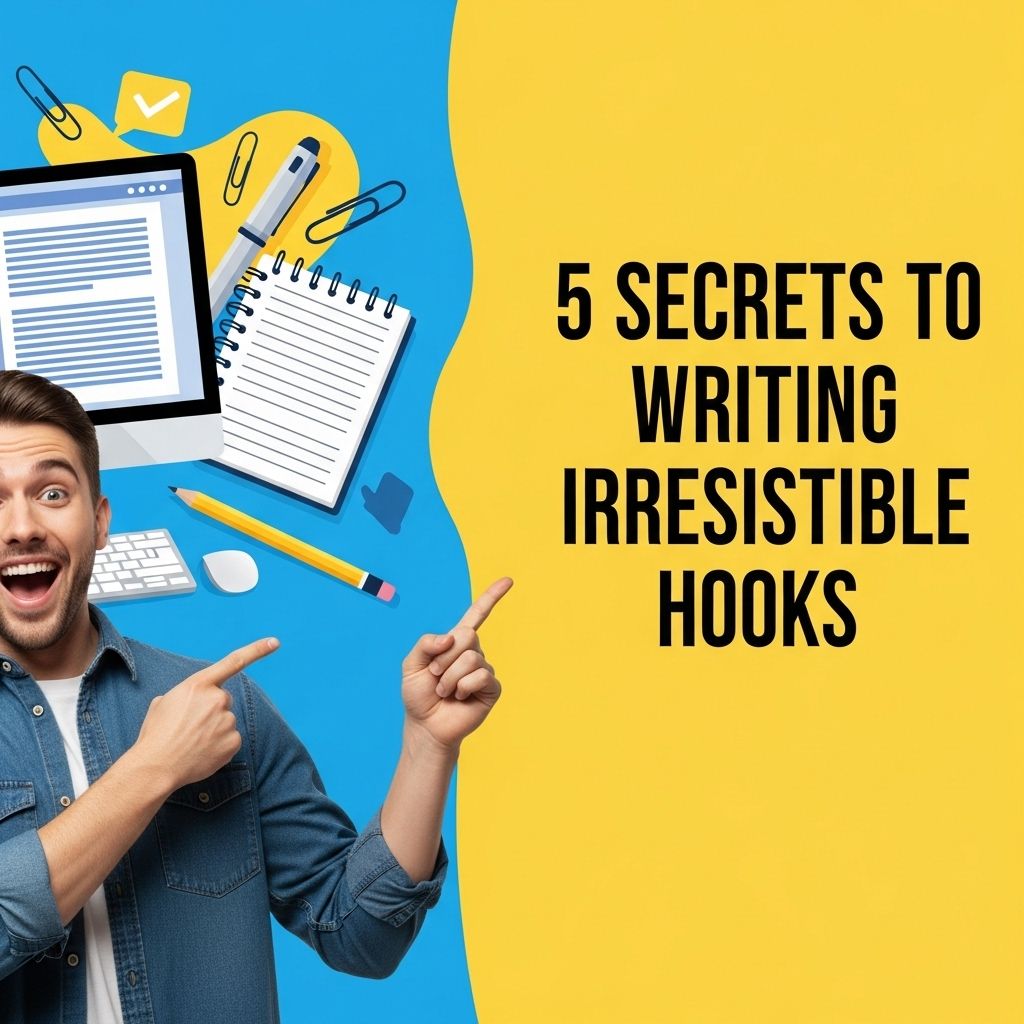
In the ever-evolving landscape of content creation, the ability to capture a reader’s attention is paramount. Every writer, whether crafting a novel, a blog post, or an advertisement, knows that the first few sentences—commonly referred to as the ‘hook’—are critical in determining whether the audience will continue reading. Writing an irresistible hook requires not just creativity but also an understanding of psychological triggers and audience engagement. This article unveils five secrets to writing hooks that not only attract but also sustain reader interest.
Creating content that captures attention is an art, and it begins with crafting irresistible hooks. In this article, we’ll uncover 5 secrets to engage your audience from the first word. For more insights on content creation best practices, visit content creation best practices.
Understanding the Psychology of Hooks
Before diving into techniques, it’s essential to grasp the psychology behind why certain hooks are more effective than others. A well-crafted hook resonates with the audience’s emotions, sparking curiosity or a sense of urgency. Here are key psychological principles to consider:
- Curiosity: Piquing interest by leaving questions unanswered.
- Empathy: Connecting with the reader’s feelings and experiences.
- Surprise: Presenting unexpected facts or twists.
- Urgency: Creating a sense of immediate relevance.
1. Start with a Provocative Question
Beginning your piece with a thought-provoking question can engage readers instantly, encouraging them to ponder and seek out answers. Here’s how to craft effective questions:
Examples of Provocative Questions
- “What would you do if you woke up tomorrow with no social media?”
- “Have you ever wondered why some startups succeed while others fail?”
- “Is technology making us smarter or more dependent?”
Questions like these not only draw readers in but also invite them to reflect on their own experiences, making the content more relatable.
2. Use Vivid Imagery
Imagery paints a picture in the reader’s mind and evokes emotions. Utilizing descriptive language can make your hook more engaging. Consider these strategies:
Techniques for Crafting Vivid Imagery
- Use sensory details: Describe sights, sounds, smells, and feelings.
- Incorporate metaphors and similes: Compare abstract concepts to familiar objects.
- Set the scene: Transport readers to a specific moment or place.
Example of Vivid Imagery
Instead of saying, “The city was busy,” try, “The city buzzed like a beehive, with honking cars and the scent of fresh pretzels wafting through the air.”
3. Share a Startling Statistic or Fact
Facts and statistics can serve as powerful hooks, capturing attention with their sheer novelty. Here’s how to effectively incorporate them:
Finding Impactful Data
- Research reputable sources for your statistics.
- Ensure the data is relevant to your topic.
- Present the information in a way that highlights its significance.
Example of a Startling Statistic
“Did you know that nearly 80% of startups fail within the first 18 months? Here’s how to beat the odds.”
4. Create an Intriguing Anecdote
Personal stories or anecdotes can forge a connection with readers. They humanize the content and make it relatable. Here are some tips:
Crafting Your Anecdote
- Choose a relevant story: Ensure it pertains to the main topic.
- Keep it concise: A few sentences can often suffice.
- Highlight a lesson or insight: Make sure it adds value to the reader.
Example of an Intriguing Anecdote
“When I launched my first blog, I spent months perfecting my content only to realize I had overlooked the importance of an engaging introduction. Here’s what I learned…”
5. Use Humor or Wit
Humor can disarm and entertain, making readers more likely to continue with your writing. Here are some ways to leverage humor:
Types of Humor for Hooks
- Puns: Playful twists on words.
- Hyperbole: Exaggerated statements for comedic effect.
- Relatable jokes: Observations about everyday life that resonate with the audience.
Example of a Humorous Hook
“If procrastination were an Olympic sport, I’d definitely win gold—if I could just find the time to train.”
Conclusion
Writing irresistible hooks is both an art and a science. By understanding the psychological underpinnings of effective hooks and employing strategies such as provocative questioning, vivid imagery, startling statistics, engaging anecdotes, and humor, writers can significantly enhance their content’s appeal. Experiment with these techniques to find your unique voice, and remember that the goal is to engage your audience from the very first line. Happy writing!
FAQ
What is a hook in writing?
A hook is a compelling opening sentence or paragraph designed to grab the reader’s attention and encourage them to continue reading.
Why are hooks important for writing?
Hooks are important because they captivate the reader’s interest right from the start, making them more likely to engage with the content.
What are some effective types of hooks?
Effective types of hooks include questions, quotes, anecdotes, surprising facts, and vivid descriptions that resonate with the reader.
How can I create a hook that resonates with my audience?
To create a hook that resonates, understand your audience’s interests and pain points, and craft an opening that speaks directly to those emotions.
Can a hook be used in different types of writing?
Yes, hooks can be used in various types of writing, including blog posts, essays, novels, and marketing copy, to draw readers in.
What are common mistakes to avoid when writing hooks?
Common mistakes include being too vague, using clichés, or failing to connect the hook to the main content, which can disengage readers.