Understanding your camera settings can be the key to capturing stunning images that convey the emotions and stories you wish to share. In this digital age, where photography is more accessible than ever, mastering the basic camera settings will empower you to elevate your photography skills, whether you’re a novice looking to improve or an experienced photographer needing a refresher. This article will guide you through essential camera settings, enabling you to take full control over your photography and create stunning visuals.
Mastering basic camera settings can significantly enhance your photography skills, allowing you to capture stunning images with ease. Today, we’ll explore essential adjustments like aperture, shutter speed, and ISO, ensuring you have a solid foundation for any scenario. For inspiration, check out these best mockups for coffee mugs to see how great photography can elevate your designs.
Understanding Exposure
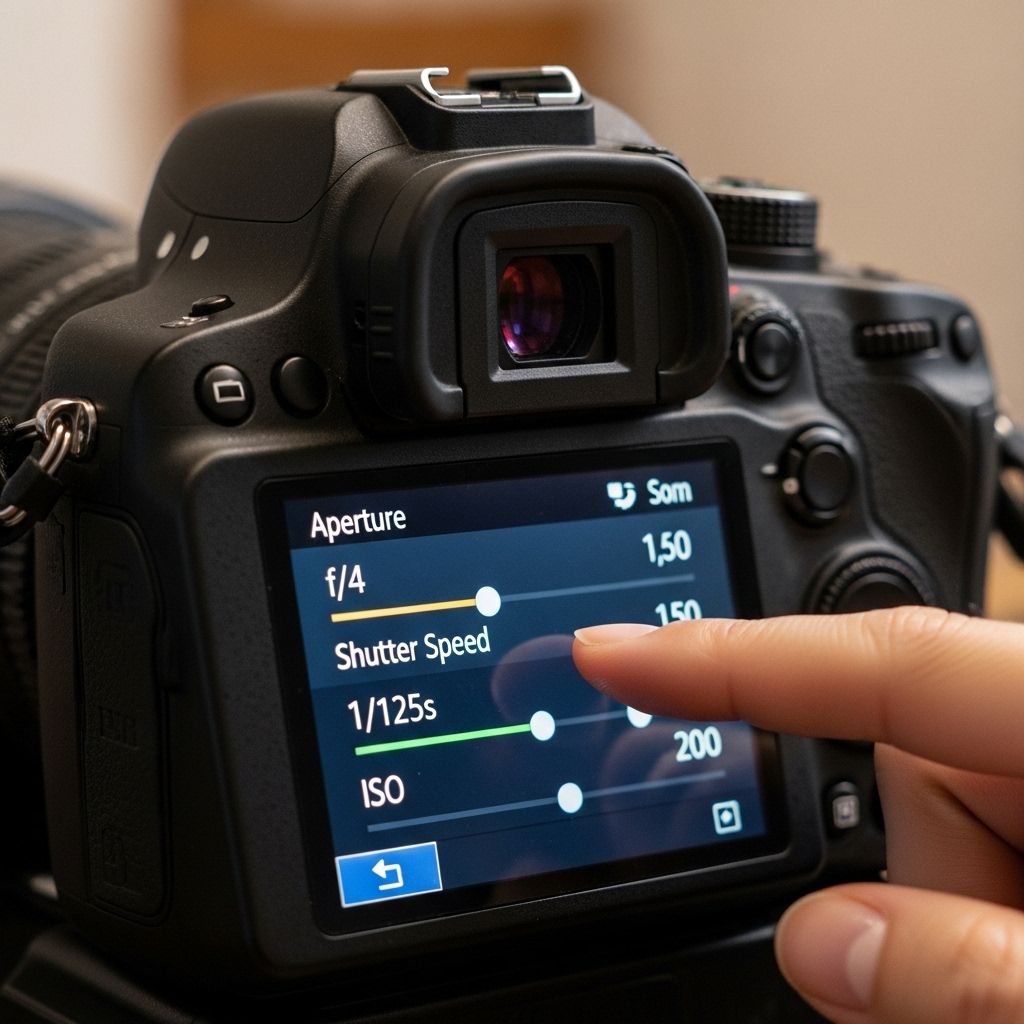
Exposure is the amount of light that reaches your camera’s sensor, and it’s crucial for achieving the desired brightness in your images. The three main components that control exposure are:
- Aperture
- Shutter Speed
- ISO
Aperture
Aperture is the opening in your lens that allows light to enter. It is measured in f-stops. Here’s how it affects your photos:
| Aperture (f-stop) | Effect on Image | Depth of Field |
|---|---|---|
| f/1.4 | Very bright; good for low light | Shallow depth of field (blurry background) |
| f/8 | Moderate light; balanced exposure | Moderate depth of field |
| f/16 | Less light; good for bright conditions | Deep depth of field (more in focus) |
Shutter Speed
Shutter speed determines how long your camera’s shutter remains open to let light in. It’s measured in seconds or fractions of a second. Here’s how it impacts your images:
- Fast Shutter Speed (e.g., 1/1000): Freezes motion, great for action shots.
- Slow Shutter Speed (e.g., 1/2): Blurs motion, ideal for capturing movement like flowing water.
ISO
ISO is the sensitivity of your camera’s sensor to light. Higher ISO settings allow for shooting in lower light conditions but can introduce noise (graininess) to your images. Here’s a quick guide:
- Low ISO (e.g., 100-200): Best for bright conditions, produces clean images.
- Medium ISO (e.g., 400-800): Good for indoor shooting.
- High ISO (e.g., 1600 and above): Use sparingly; may result in noise.
Achieving the Right Exposure
To achieve the right exposure, you need to find the right balance between aperture, shutter speed, and ISO. This balance is often referred to as the exposure triangle. Here’s a step-by-step approach:
- Set your ISO based on the available light.
- Choose your aperture based on the depth of field you desire.
- Adjust your shutter speed to achieve a balanced exposure.
Use your camera’s histogram to help gauge the exposure of your images. Aim for a balanced histogram that does not have extreme peaks on either end.
Focusing Techniques
Sharp focus is essential for capturing compelling photographs. Here are some focusing techniques:
Autofocus Modes
Most cameras offer multiple autofocus modes:
- Single-Point Autofocus: Best for stationary subjects.
- Continuous Autofocus: Ideal for moving subjects, as it continually adjusts focus.
- Automatic Autofocus: The camera chooses the focus point.
Manual Focus
Manual focus allows you to have complete control over your focus point. This is particularly useful in low-light situations or when shooting macro photography.
Composition Fundamentals
Once you’ve mastered exposure and focus, the next step is to think about composition. Here are some important composition techniques:
Rule of Thirds
Divide your frame into a 3×3 grid and place your subject along these lines or at their intersections to create a balanced image.
Leading Lines
Use natural lines in the scene to lead the viewer’s eye towards the subject.
Framing
Use elements in your environment to frame your subject, which can add depth to the image.
Post-Processing Basics
After capturing your images, post-processing is where you can refine your photographs further. Here are some basic post-processing tips:
- Adjust Exposure: Fine-tune your images to achieve the desired brightness.
- Improve Contrast: Enhance the difference between highlights and shadows.
- Crop: Remove unwanted elements and improve composition.
Conclusion
Mastering basic camera settings is an essential skill for any photographer looking to take their work to the next level. By understanding exposure, focusing techniques, composition fundamentals, and post-processing, you can transform your photography from mediocre to extraordinary. Remember, practice is key; the more you experiment with your settings and techniques, the more proficient you’ll become. So grab your camera, head outside, and start applying these principles to capture stunning images!
FAQ
What are the basic camera settings I should know?
The basic camera settings include ISO, shutter speed, and aperture. Understanding how these settings work together is essential for mastering photography.
How does ISO affect my photos?
ISO controls the camera’s sensitivity to light. Increasing the ISO allows you to shoot in low light but may introduce noise, so it’s important to find a balance.
What is shutter speed and why is it important?
Shutter speed refers to the amount of time the camera’s shutter is open. It affects motion blur; a fast shutter speed freezes motion, while a slow shutter speed can create a blur effect.
What role does aperture play in photography?
Aperture controls the size of the lens opening, affecting the amount of light that enters the camera. It also influences depth of field, allowing you to blur backgrounds or keep everything in focus.
How can I practice my camera settings effectively?
You can practice by shooting in different lighting conditions and adjusting your ISO, shutter speed, and aperture manually. Experimenting with these settings will enhance your understanding and skills.
Are there recommended camera settings for beginners?
For beginners, using aperture priority mode is a great way to learn. Start with a low ISO, a moderate shutter speed, and adjust the aperture to achieve the desired effect in your images.