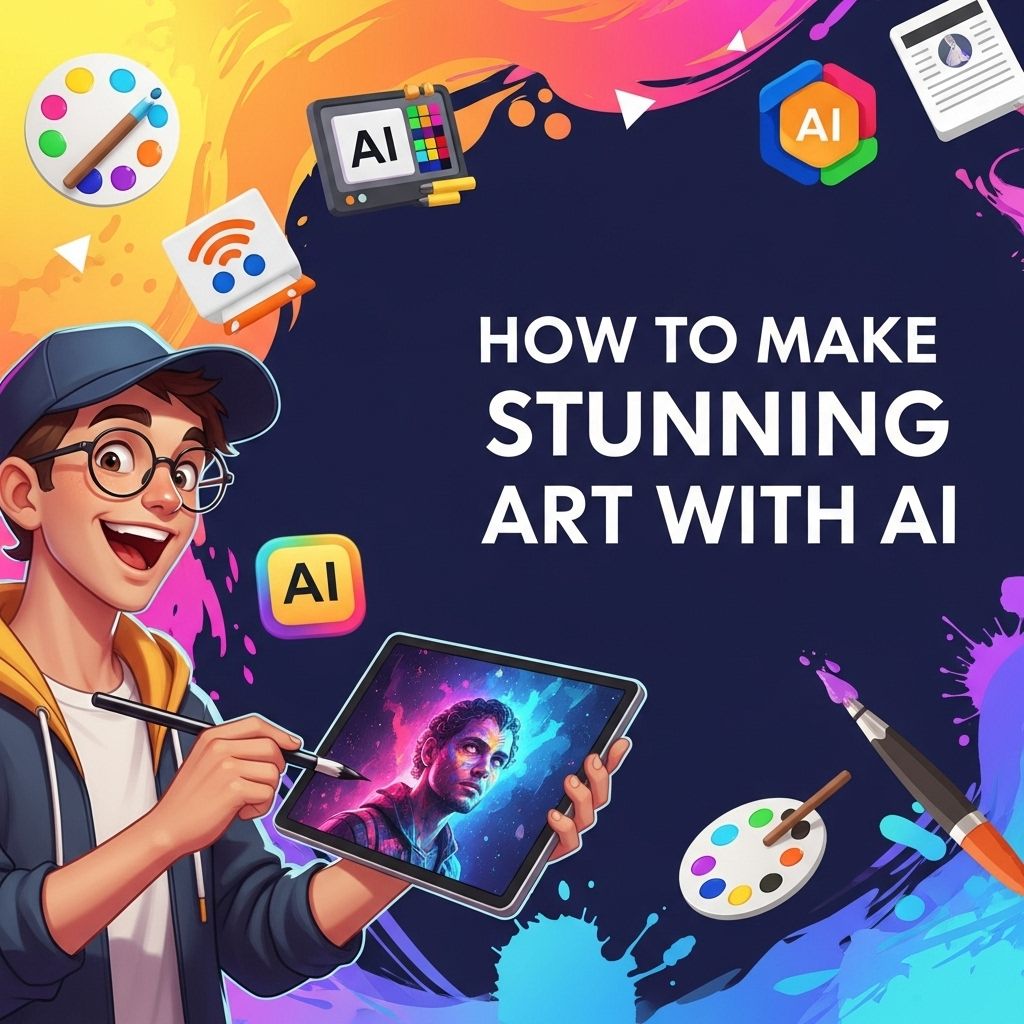
Artificial Intelligence (AI) has revolutionized various fields, and art is no exception. With AI tools, artists can explore new dimensions of creativity that were previously unattainable. From generating unique art pieces to collaborating with algorithms, the intersection of technology and creativity offers thrilling possibilities. This article delves into the various ways one can create stunning art using AI, incorporating tools, techniques, and inspiration for both seasoned artists and newcomers alike.
Artificial intelligence is revolutionizing the art world, enabling creators to produce stunning visuals with unprecedented ease. This complete guide delves into various AI tools that can enhance your artistic process, offering valuable insights into how to harness this technology for your creative endeavors. For deeper understanding, explore the latest AI technology insights.
Understanding AI in Art
AI in art refers to the use of artificial intelligence technologies to create visual artworks, music, and even literature. These technologies can analyze massive datasets, identify patterns, and generate new content that mimics human creativity. The most common methods include:
- Generative Adversarial Networks (GANs): A machine learning framework where two neural networks compete against each other to produce content.
- Deep Learning: A subset of machine learning that mimics human brain function to learn from large datasets.
- Neural Style Transfer: An AI technique that applies the style of one image to the content of another, blending them creatively.
Choosing the Right Tools
There are numerous AI tools available for artists today. Here are some of the most popular platforms that enable users to create stunning artworks:
1. DeepArt
DeepArt utilizes deep learning algorithms to transform photographs into artworks based on the styles of famous painters.
2. Artbreeder
This platform allows users to blend images and generate new designs through a collaborative approach, enabling users to evolve their creations over time.
3. Runway ML
A comprehensive tool for creatives, Runway ML offers AI-powered features for video editing, motion graphics, and image generation.
4. DALL-E 2
Developed by OpenAI, DALL-E 2 is capable of generating high-resolution images from textual descriptions, showcasing the profound capabilities of AI in art.
The Creative Process
Creating art with AI involves a blend of traditional artistic skills and an understanding of technology. Here’s a step-by-step guide to get you started:
Step 1: Define Your Concept
Before jumping into the tools, take time to define what you want to create. Whether it’s a portrait, abstract piece, or an entirely new medium, clarity in your concept will guide your process.
Step 2: Choose Your Tools
Select the appropriate AI tool that aligns with your artistic vision. For instance, if you want to create a stylized portrait, consider using Neural Style Transfer tools.
Step 3: Generate Initial Artworks
Using your chosen tool, generate a series of initial artworks. Don’t be afraid to experiment and produce a plethora of iterations!
Step 4: Refine and Iterate
Review the generated art and identify elements that resonate with your vision. You can refine these elements manually or use the AI tool iteratively to produce variations.
Step 5: Finalize Your Artwork
Once you’ve honed in on the desired style and composition, finalize your artwork. Consider adding personal touches or combining your AI-generated piece with traditional artistic techniques.
AI Art Techniques
Here are some popular techniques to explore when working with AI in art creation:
1. Style Transfer
This technique takes the stylistic elements of one image and applies them to another. It’s perfect for creating artworks that fuse the content of a photo with the aesthetic of famous artists.
2. Image Synthesis
Generate entirely new images based on the input parameters you define. This technique empowers artists to push the boundaries of creativity with AI-generated visuals.
3. Collaborative AI
Engage in a creative dialogue with AI tools, allowing them to influence your artistic decisions. This collaboration can lead to unexpected and innovative results.
Showcasing Your AI Art
After creating stunning pieces, it’s essential to showcase your work effectively. Here are some approaches to consider:
- Online Portfolios: Create an online portfolio using platforms like Behance or ArtStation to display your AI artworks.
- Social Media: Utilize platforms like Instagram, TikTok, or Twitter to share your process and finished pieces with a large audience.
- Exhibitions: Look for local galleries or online exhibitions that embrace digital and AI art for showcasing your work.
The Future of AI in Art
As AI technology continues to evolve, its impact on the art world will undoubtedly grow. Here are some trends to watch for:
1. Increased Accessibility
More artists will gain access to advanced AI tools, democratizing the creation process and fostering a diverse range of artistic expressions.
2. New Collaborations
The collaboration between human artists and AI will result in hybrid forms of art that blend traditional methods with cutting-edge technology.
3. Ethical Considerations
As AI-generated works gain popularity, discussions about copyright, ownership, and the value of human creativity will become increasingly significant.
Conclusion
The ability to create stunning art with AI opens up a universe of possibilities for artists of all backgrounds. By understanding the tools, techniques, and methods available, you can harness the power of AI to push your artistic boundaries. Embrace the fusion of technology and creativity, and let your imagination run wild in this new era of art.
FAQ
What tools can I use to create art with AI?
There are several tools available for creating art with AI, including DeepArt, Artbreeder, and DALL-E. These platforms utilize machine learning algorithms to generate unique artistic images.
Is it necessary to have artistic skills to create AI art?
No, you do not need to have artistic skills to create AI art. Many AI art tools are user-friendly and designed for beginners, allowing anyone to create stunning visuals.
Can I use AI-generated art for commercial purposes?
The ability to use AI-generated art for commercial purposes depends on the specific platform’s terms of service. Always check the licensing agreements before using AI art commercially.
How can I enhance my AI-generated art?
You can enhance your AI-generated art by using photo editing software like Photoshop or GIMP to add details, adjust colors, or combine it with traditional artwork.
What are some popular styles of AI-generated art?
Popular styles of AI-generated art include abstract, surrealism, impressionism, and photorealism. Many AI tools allow you to experiment with different styles to find what resonates with you.
Is AI art considered real art?
Yes, AI art is considered real art as it involves creativity and expression. The debate over its legitimacy continues, but many artists embrace AI as a new medium for artistic exploration.