
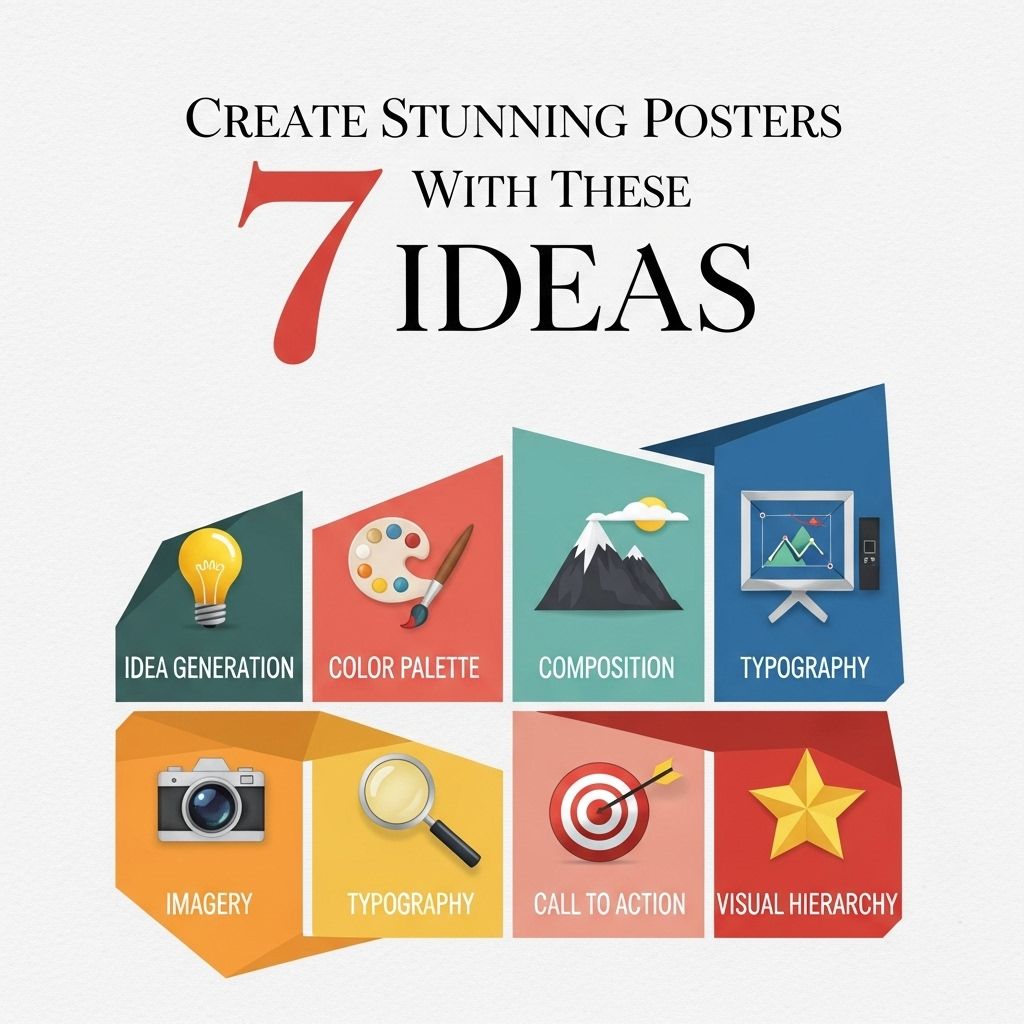
In the world of design, creating a stunning poster can be a powerful way to communicate ideas, promote events, or simply express creativity. Whether you are a seasoned graphic designer or just starting, understanding the elements that can make your poster stand out is essential. In this article, we will explore seven innovative ideas that will help you craft eye-catching posters that capture attention and convey your message effectively.
Creating eye-catching posters can elevate your design game and capture attention effortlessly. With these 7 creative ideas, you can transform your concepts into stunning visuals that stand out. For those looking to refine their skills, understanding advanced brush settings in Photoshop is essential in achieving professional results.
1. Use Bold Typography
Typography is a critical element in poster design. The typeface you choose can significantly impact the overall look and feel of your poster. Here are some tips to harness the power of typography:
- Pick a Focal Font: Choose one or two fonts that represent the theme of your poster.
- Contrast Sizes: Use different font sizes to create a hierarchy of information.
- Play with Kerning: Adjust the space between letters to enhance readability.
Examples of Typography Usage
| Poster Theme | Font Type | Effect |
|---|---|---|
| Music Festival | Sans-serif Bold | Modern and Energetic |
| Art Exhibition | Serif Elegant | Classic and Artistic |
| Charity Event | Handwritten | Personal and Inviting |
2. Embrace Minimalism
Less is often more when it comes to poster design. A minimalist approach can help convey your message clearly without overwhelming the viewer. Consider the following:
- Limit Your Color Palette: Use two to three complementary colors.
- Focus on Key Elements: Eliminate any unnecessary graphic elements that do not contribute to the message.
- White Space: Use negative space strategically to create balance and draw attention to focal points.
Benefits of Minimalism
Minimalist posters are often easier to understand and can convey powerful messages in a simple manner. Some benefits include:
- Enhanced readability
- Improved focus on the main subject
- Timeless appeal
3. Experiment with Color Schemes
Color plays a crucial role in attracting attention and evoking emotions. When creating your poster, think about how colors can influence perception:
- Use Color Psychology: Different colors can evoke different feelings (like blue for calmness or red for excitement).
- Ensure Contrast: High contrast between text and background colors improves readability.
- Consider Trends: Be aware of current color trends in design, such as Pantone’s Color of the Year.
Popular Color Schemes
| Scheme | Description |
|---|---|
| Monochromatic | Variations of a single color for a harmonious look. |
| Analogous | Colors next to each other on the color wheel for a soothing effect. |
| Complementary | Opposing colors on the color wheel that create striking contrasts. |
4. Incorporate Illustrations and Graphics
Illustrations and graphics can add a unique touch to your posters. They can make complex ideas more digestible and engaging:
- Custom Illustrations: Create unique visuals that reflect your brand or message.
- Infographics: Use charts and graphics to present data in a visually appealing way.
- Icons: Incorporate relevant icons to represent different sections of your poster.
Types of Illustrative Elements
Consider including elements like:
- Hand-drawn designs for a personal touch
- Vector graphics for scalability
- Photographic overlays to add depth
5. Layering Techniques
Layering can create depth and intrigue in your poster design. It involves placing elements on top of one another to create dimension:
- Overlapping Shapes: Use transparent shapes to create interest.
- Text Over Images: Layer text over images carefully to ensure readability.
- Shadowing: Add subtle shadows to elements to enhance the 3D effect.
Tips for Effective Layering
To achieve effective layering, keep in mind:
- Maintain a clear visual hierarchy.
- Ensure that overlapping elements are complementary.
- Use gradients to soften transitions between layers.
6. Make Use of Unique Formats
While traditional posters are typically rectangular, exploring unique formats can make your design stand out:
- Shapes: Consider circular or triangular posters for an eye-catching look.
- Foldable Posters: Create posters that can be folded into smaller shapes or used as brochures.
- 3D Elements: Incorporate pop-up features or textured materials.
Advantages of Unique Formats
Utilizing non-traditional formats can create memorable experiences for viewers, making your poster more likely to be retained and shared.
7. Integrate QR Codes
In the digital age, integrating technology into your posters can enhance user engagement:
- Link to More Information: Use QR codes to direct viewers to websites, social media, or event registration.
- Track Engagement: QR codes can help you measure how many people interacted with your poster.
- Interactive Elements: Connect viewers to videos, music, or augmented reality experiences.
Best Practices for QR Codes
When adding QR codes to your posters, consider the following:
- Ensure the code is prominently placed and large enough to scan.
- Test the QR code before printing to ensure it links correctly.
- Provide a brief explanation of what viewers can expect after scanning.
Creating stunning posters is a blend of art and strategy. By applying these seven ideas, you will be well on your way to designing posters that are not only visually appealing but also effectively convey your message. Don’t be afraid to experiment with different styles and elements – the world of design is your oyster!
FAQ
What are some creative ideas for designing stunning posters?
Consider using bold typography, vibrant colors, unique layouts, eye-catching images, minimalistic designs, thematic elements, and incorporating textures for a visually appealing poster.
How can I make my poster stand out?
Use contrasting colors, large fonts, and striking visuals to grab attention. Additionally, keep the message clear and concise to ensure it resonates with your audience.
What tools can I use to create posters?
Popular tools for poster creation include Adobe Photoshop, Canva, Adobe Illustrator, and online design platforms like Crello and Snappa.
What size should my poster be for maximum impact?
Common poster sizes include 24×36 inches for large displays and 11×17 inches for smaller prints. Choose a size that fits your intended display area.
How can I ensure my poster is print-ready?
Make sure your poster design is in high resolution (300 DPI), use CMYK color mode for printing, and save your file in formats like PDF or TIFF for best results.
What themes work best for poster designs?
Popular themes include events, promotions, educational content, artistic designs, motivational quotes, and seasonal celebrations. Choose a theme that aligns with your purpose.


